When the cold store alarm fires at 06:42: from IoT alert to SLA job
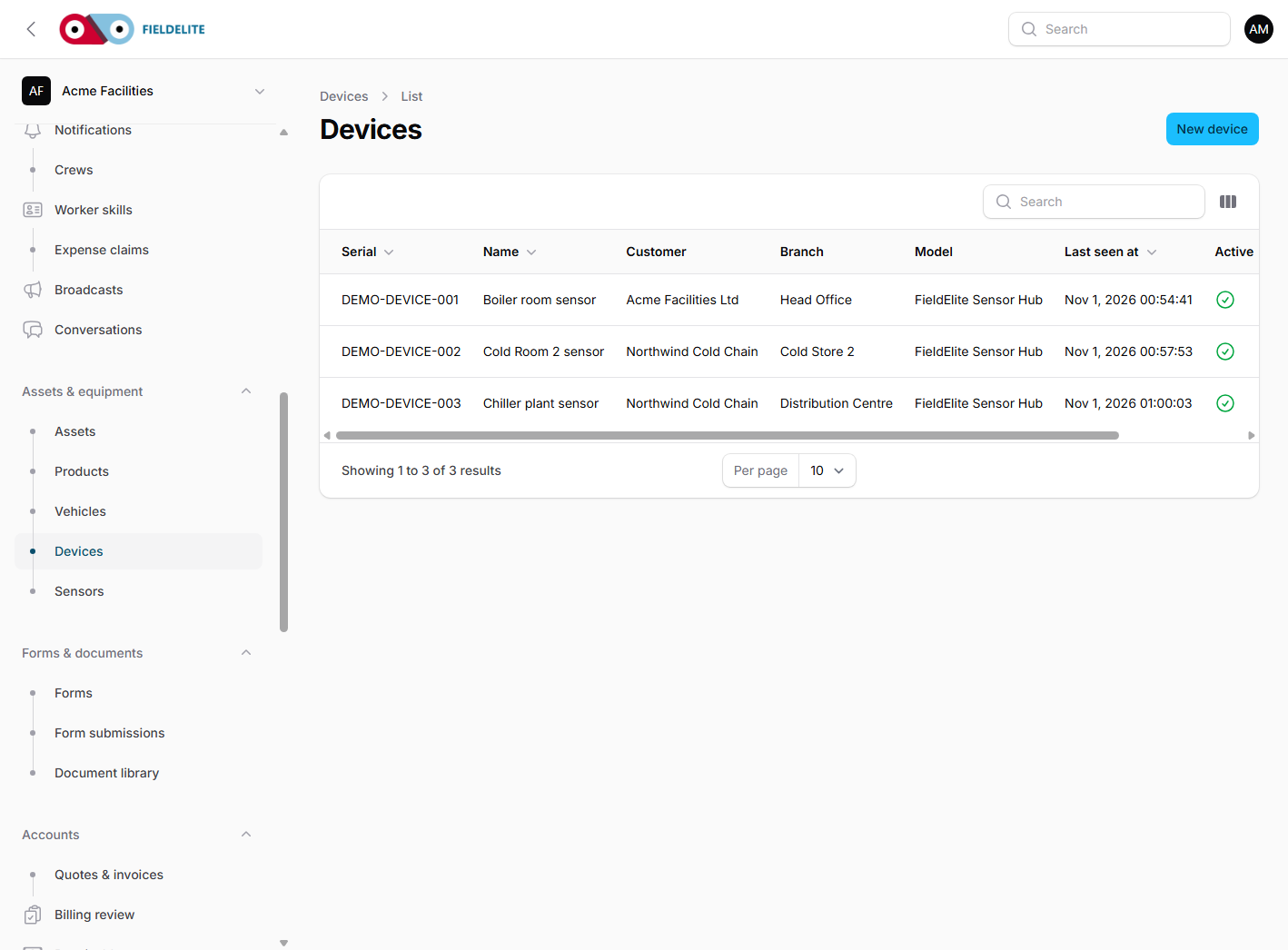
At 06:42, the Cold Room 2 sensor drifts above setpoint. Stock is at risk. The phone has not rung yet, but the day has already changed.
An alert is useful. An alert that becomes an owned job, with a service clock and the right engineer, is what protects the stock and the customer relationship.
Why an alert on its own is not enough
Most monitoring systems are good at detecting a threshold. The operational questions start after the alarm:
- Who owns the response?
- Which engineer is qualified to work on this equipment?
- What is the contractual response time, and when does it start?
- Where is the temperature evidence stored?
- If the alert repeats, how do we avoid creating a second job?
If those answers live in four places, the alarm creates work instead of removing it.
The chain in the Northwind demo
The FieldElite demo workspace includes Northwind Cold Chain, a distribution centre in Cork with a Cold Store 2. The sensor is visible on the Devices page with its telemetry history and alarm point.
When the alert is raised, the result is a job: Cold Room 2 temperature excursion. It is urgent, the source is recorded as an IoT alert, and the SLA targets are attached. The original alert note stays with the job, so the engineer knows what triggered the visit.
On the dispatch board, the job is matched against F-Gas skills and distance. The closest engineer is not automatically the right engineer. The board shows both, and the dispatcher makes the call.
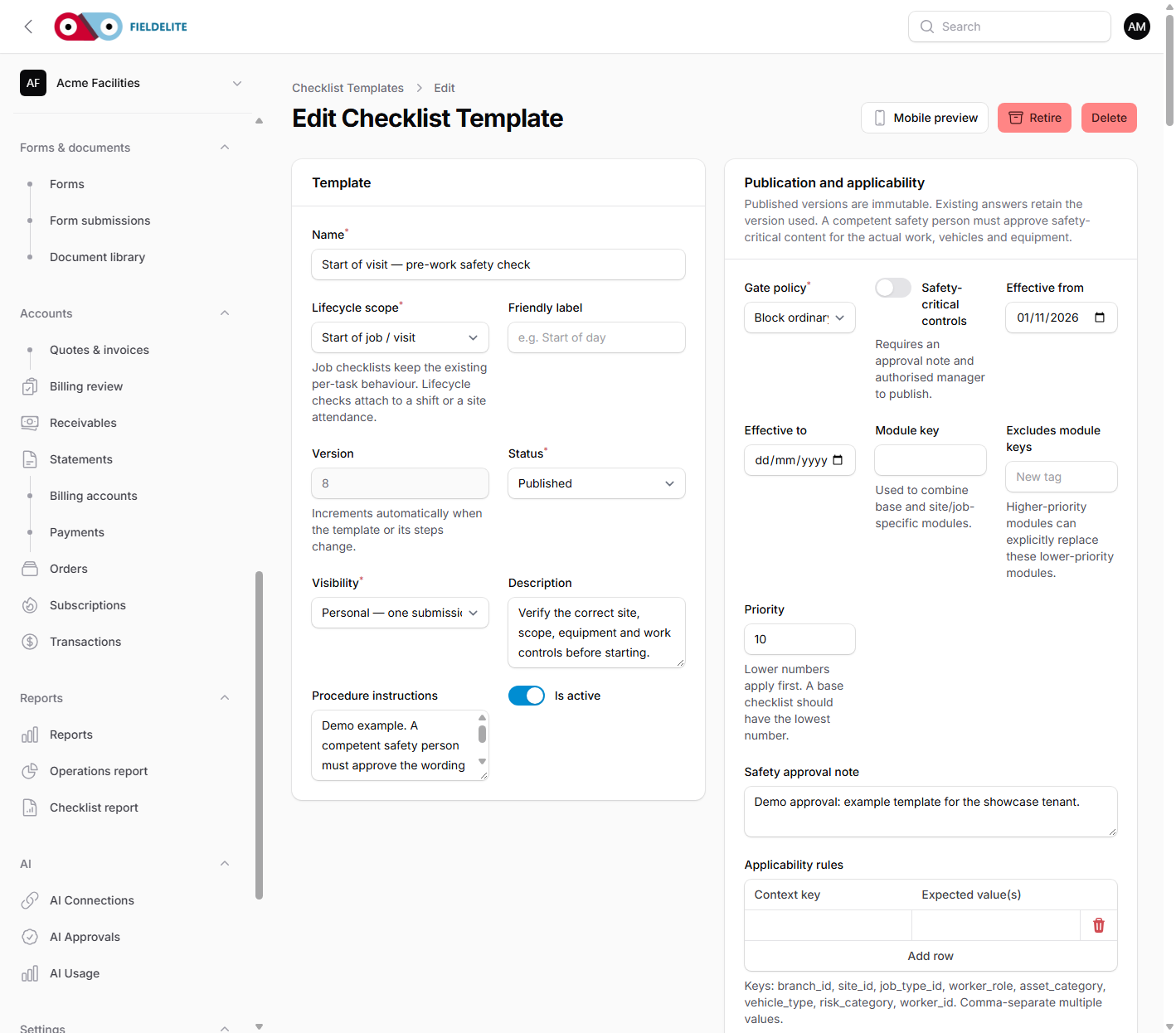
On site, the job carries the evidence photo, checklist readings, a defect and any parts used. Those readings are the temperature record the customer may later need to show an insurer. They are not a separate attachment in someone's inbox.
Duplicate protection is part of the design
Sensors retry. Networks flap. A good integration must assume the same alert can arrive twice.
The demo script can be run twice to show the behaviour: the second run reports a duplicate rather than creating a second job. That is not a small technical detail. Duplicate jobs create duplicate dispatches, duplicate invoices and a customer who stops trusting the system.
The principle is simple: the device raises work, and a person decides who attends. Automation should make the decision easier, not remove the accountability.
From reactive to planned
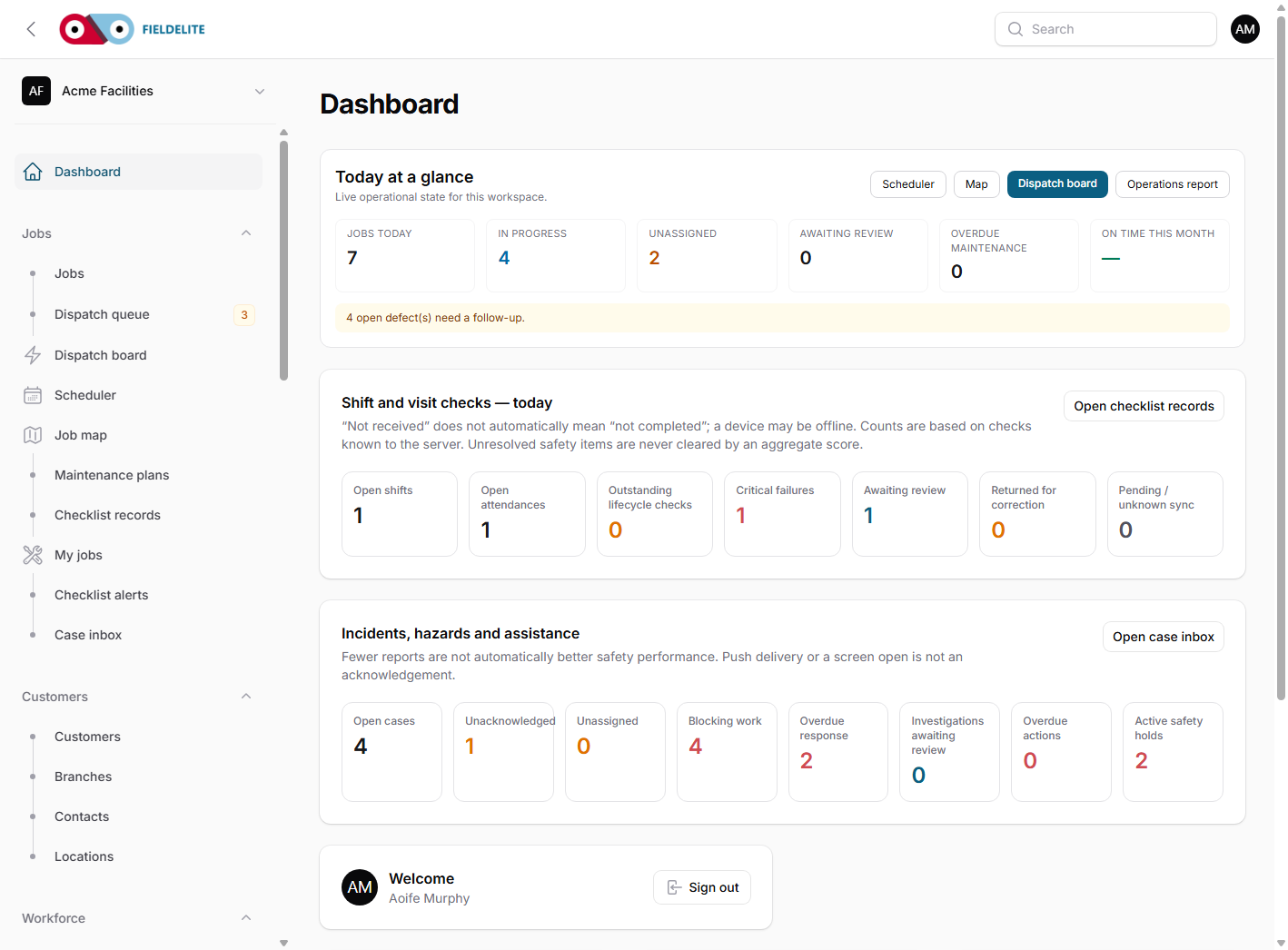
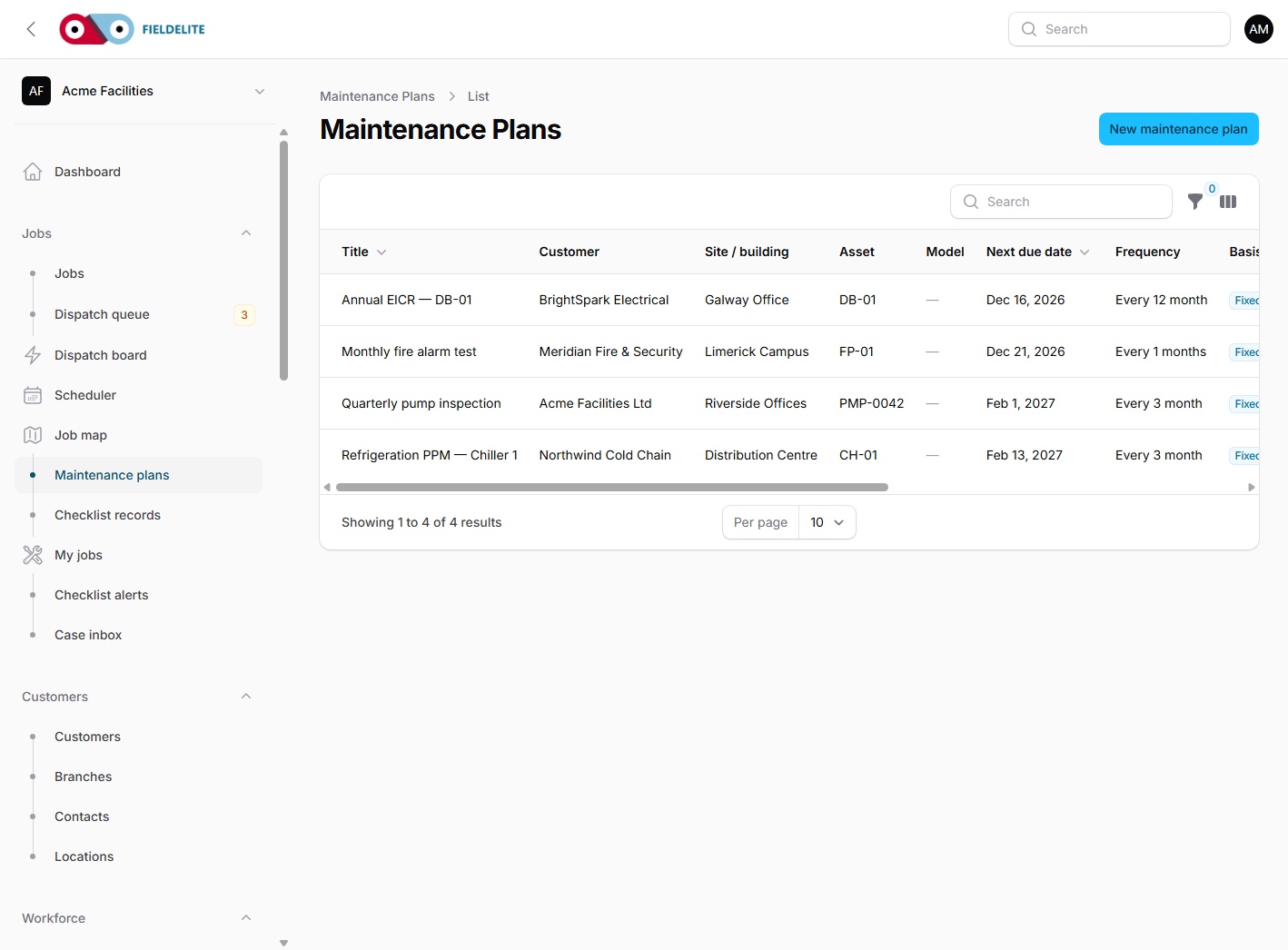
The same cold store also has a quarterly refrigeration maintenance plan. The planned visit and the reactive alarm live in the same system, so the service history is complete. A compressor that trips in July is viewed in the context of the readings and inspections from the previous quarters.
When the engineer recommends a replacement, the quote for the compressor is linked to the job and the asset. The customer can see why the recommendation exists, not just a price. The overdue compressor service invoice sits in receivables with the rest of the account.
What the insurer asks for
After a temperature excursion, the questions are usually straightforward:
- When did the deviation start?
- When was it detected?
- Who responded, and when did they arrive?
- What was found and what was done?
- What evidence exists that the stock was protected?
A connected record answers those questions with timestamps, readings, notes and photos. A collection of screenshots and emails answers them slowly, if at all.
What to automate first
- Map each critical sensor to a site, asset and job template.
- Set the SLA target by priority, and make the clock visible on the job.
- Record the alert payload and the duplicate check.
- Require a reading and a photo before the job can be completed.
- Keep the planned maintenance plan for the same asset, so reactive and planned history sit together.
Plan fit
IoT, SLA tracking, the dispatch board, inventory and parts, and the workflow engine are part of Professional. Checklists, the mobile app and preventive maintenance are included from Starter, and forms join on Growth. Enterprise adds customer tracking, weather and custom integrations if you need to connect a building management system or another telemetry source.
See what each plan includes, or start a 30-day trial and connect one sensor to one job.
The Northwind Cold Chain scenario comes from the FieldElite demo workspace and is illustrative, not a real customer result.