Emergency call-out end to end: from the dispatcher's drag to the paid invoice
A leak at a managed site becomes a scheduled job, a signed RAMS, photo evidence, an OCR receipt and a paid invoice.
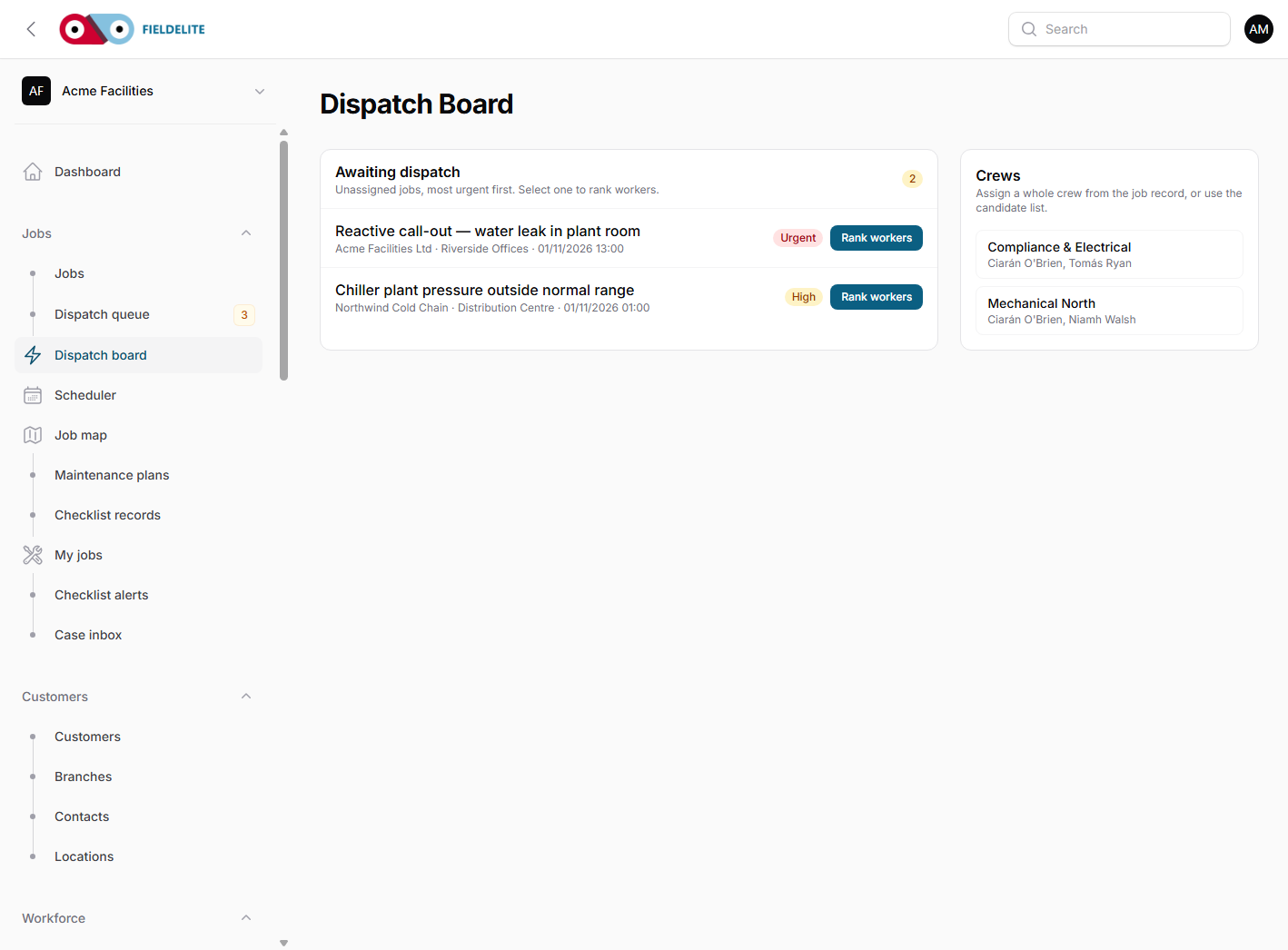
A leak is reported at 08:05. The dispatcher has three engineers, one van in the workshop and a customer who needs proof that the site was made safe.
This is the workflow we use in the demo.
Dispatch
The job is created from the customer and site. The access notes, the pump asset and the urgency go on the record. The dispatcher drags it onto the timeline. The closest qualified engineer accepts it.
Safety
The engineer opens the RAMS and SPA on the phone. The method statement is already tailored to the site. The hazards are manual handling, slippery floor and working near the electrical panel. The engineer records the controls, signs the responsible-person section and briefs the site contact.
Work and evidence
The engineer photographs the leak, isolates the valve, replaces it and photographs the completed work. The customer signs on the device. The parts and notes go on the job.
Expense
The parking receipt is photographed in the van. OCR reads the merchant and total. One field is low confidence, so the engineer corrects it and submits the claim.
Invoice
The office reviews the job, approves the expense and raises the invoice from the job. The payment is recorded the following week.
The value is not any single screen. It is that the same record carries the evidence from the call to the cash.
Related: Emergency call-out case workflow · Job scheduling

Ciarán is a mechanical engineer who spent years on call-outs and plant rooms. He tests the mobile workflows on real sites, not just in the office.