The daily vehicle check that isn't just a formality
A ticked box proves nothing. How a daily van walk-around with photos, time stamps and a real defect gate protects the driver and the operator.
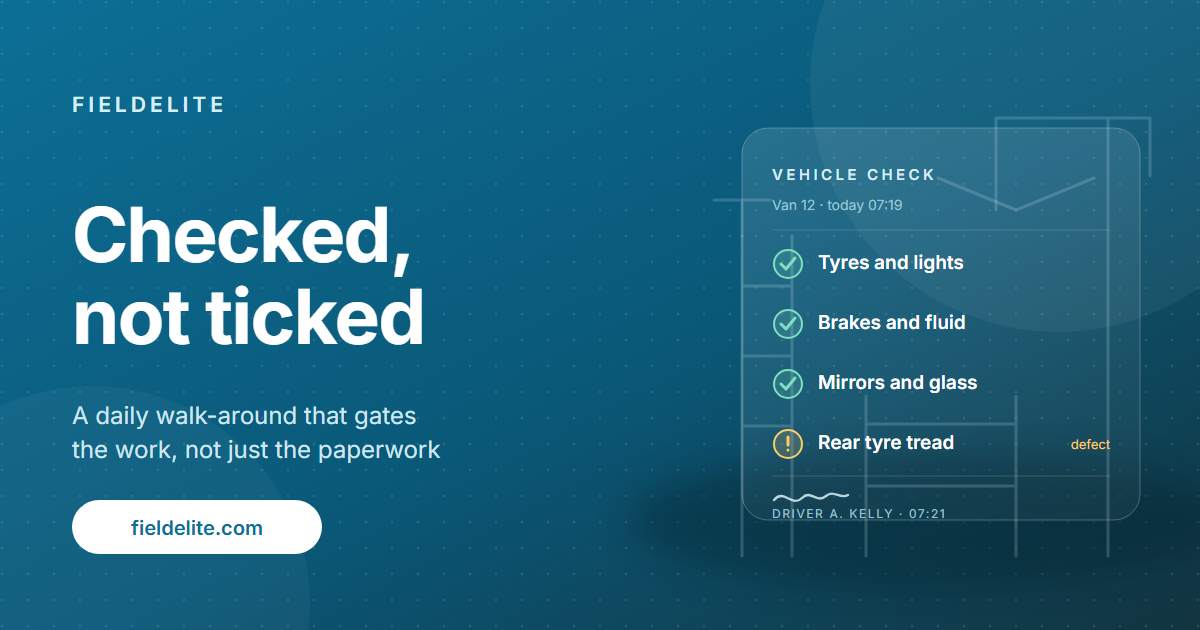
Every morning, in thousands of vans, the same ritual plays out. The driver grabs the clipboard hanging in the cab, ticks a column of boxes in about eleven seconds, and drives off. The sheet says the vehicle was checked. The driver knows nothing was checked. So does the transport manager, on some level, and so would a court.
The real cost of the fiction
A vehicle check that is never actually performed is not a neutral habit. It is a liability generator. Consider:
- If the van is stopped at a roadside inspection and a defect is found that a competent daily check would have caught, the check sheet doesn't protect the driver or the operator; it incriminates them. It is a signed statement that a check took place which demonstrably didn't.
- If that defect contributes to an incident, the signed-but-false sheet is the single worst document in the company's file. It converts an oversight into a misrepresentation.
- Insurance disputes over commercial vehicle claims routinely examine maintenance and check records. A pattern of suspiciously identical tick sheets is exactly what an assessor is looking for.
Most drivers aren't cutting corners out of bad faith. They're cutting corners because the check competes with the first job of the day, and nothing in the process enforces the difference between a genuine check and a signature.
What good looks like: a gate, not a form
The fix is simple and structural: on the phone, the check is a series of real items with a photo and a status, and it happens before the day's jobs open. If the check fails, the work stays blocked until someone with authority deals with it. That single mechanic changes behaviour, because it removes the incentive to tick-and-go and replaces it with a reason to look.
Done right, the check record becomes an asset rather than a threat:
- Every check is time-stamped, geolocated and attributable to a driver, not "whoever grabbed the clipboard".
- Defects trigger a defensible trail: reported, acknowledged, resolved.
- When the roadside inspector asks for check history, the answer is an export, not a filing cabinet.
The quiet payoff
Fleets that take daily checks seriously report fewer roadside prohibitions, better residual values on disposal, and, less measurable but real, drivers who treat the vehicle as equipment rather than transport. None of that happens while the check is fiction.
FieldElite ties the daily vehicle check to the working day: jobs don't open until the check is done, and a failed check stops the work until it's dealt with. Start a free trial and see what changes when the check is real.
Related: Multi-van fleet compliance case workflow · Safety checklists, RAMS and SPA · Daily vehicle and shift checks help · Compare the plans

Niamh works on RAMS, SPA, vehicle checks and audit evidence for HVAC and cold-chain contractors. She reviews the safety templates with a competent-person mindset.