Peak trading without the chaos: occupancy, safety and security at Christmas
Crowd incidents happen in predictable windows. How live occupancy and flow sensing restore the soft-intervention window and improve next year's plan.
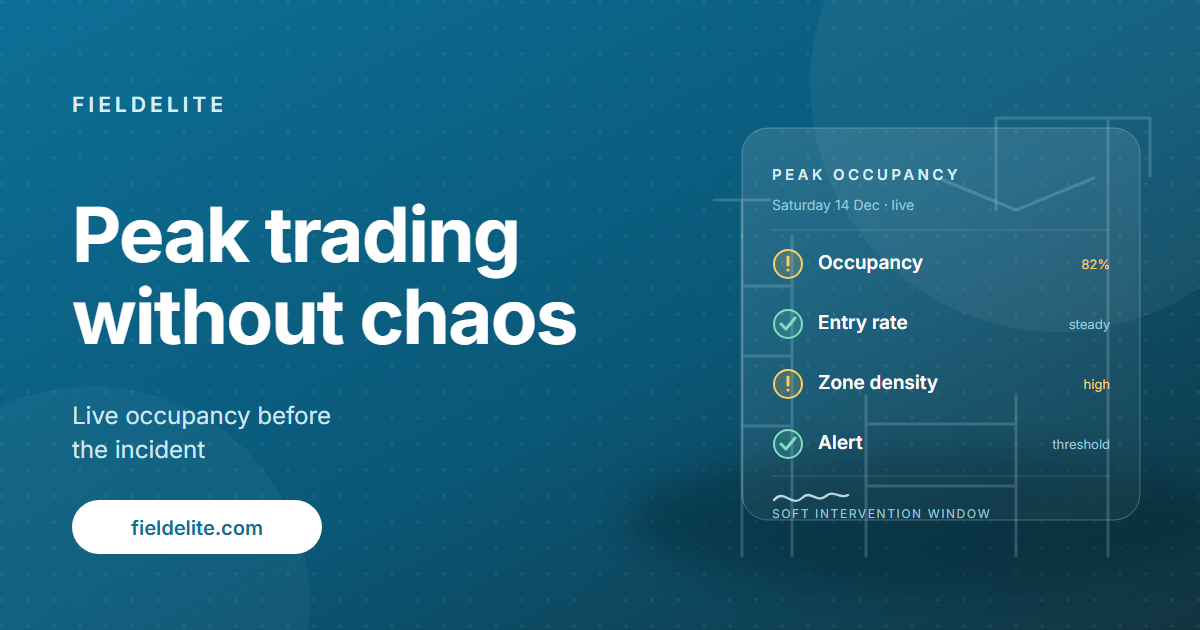
Every retailer knows peak trading will be intense; every retailer's plan for the intensity is largely demographic memory — last year's rota, the manager's experience, the weather. And each peak, an awkward truth is written into incident reports: most overcrowding and crowd-safety incidents occur during predictable windows on predictable days.
The two failure modes
- The reactivity gap: by the time the queue at the door indicates overcrowding, the operational choices available are all late — gate the entrance (revenue loss), call security (reputation cost), or absorb the risk. The window in which soft interventions — extra till, redeployed staff, flow management — would have sufficed has already passed.
- The evidence gap: after the peak, the debrief is impressionistic. Where exactly did flow break down? Which hours exceeded comfortable occupancy? Nobody knows, so last year's data cannot improve next year's plan, and the same risk repeats annually with growth compounding it.
What live occupancy changes
Continuous anonymous occupancy and flow sensing provides the current peak its missing instrument: live occupancy against a comfort-and-safety threshold, entry rate, and zone-level density inside the store or centre. That turns peak management from reactive crowd control into operations management:
- Alerts at thresholds, not at incidents, restoring the soft-intervention window.
- Live redeployment decisions (tills, staff, flow marshalling) against numbers rather than instinct.
- A post-peak debrief with hourly evidence, which compounds into an improving plan rather than a repeated one.
There's also a compliance dimension: safety obligations for crowded premises increasingly expect a demonstrable management approach, and a monitored occupancy record is exactly what that demonstration looks like. Where an incident does occur, the cases and holds guide covers the operational record that sits beside it.
CrowdSense delivers live occupancy, entry-rate and zone density anonymously. Talk to Denizon about a peak-season pilot — ideally commissioned by early autumn, so the system learns your store before the rush.
Related: Operations analytics and forecasts · Reports, map and billing review · Incidents, hazards and work holds · About FieldElite and Denizon

Nora writes about the operational and commercial questions behind service delivery: cost-to-serve, energy performance, footfall and transport planning.